

Eternal Dissonance

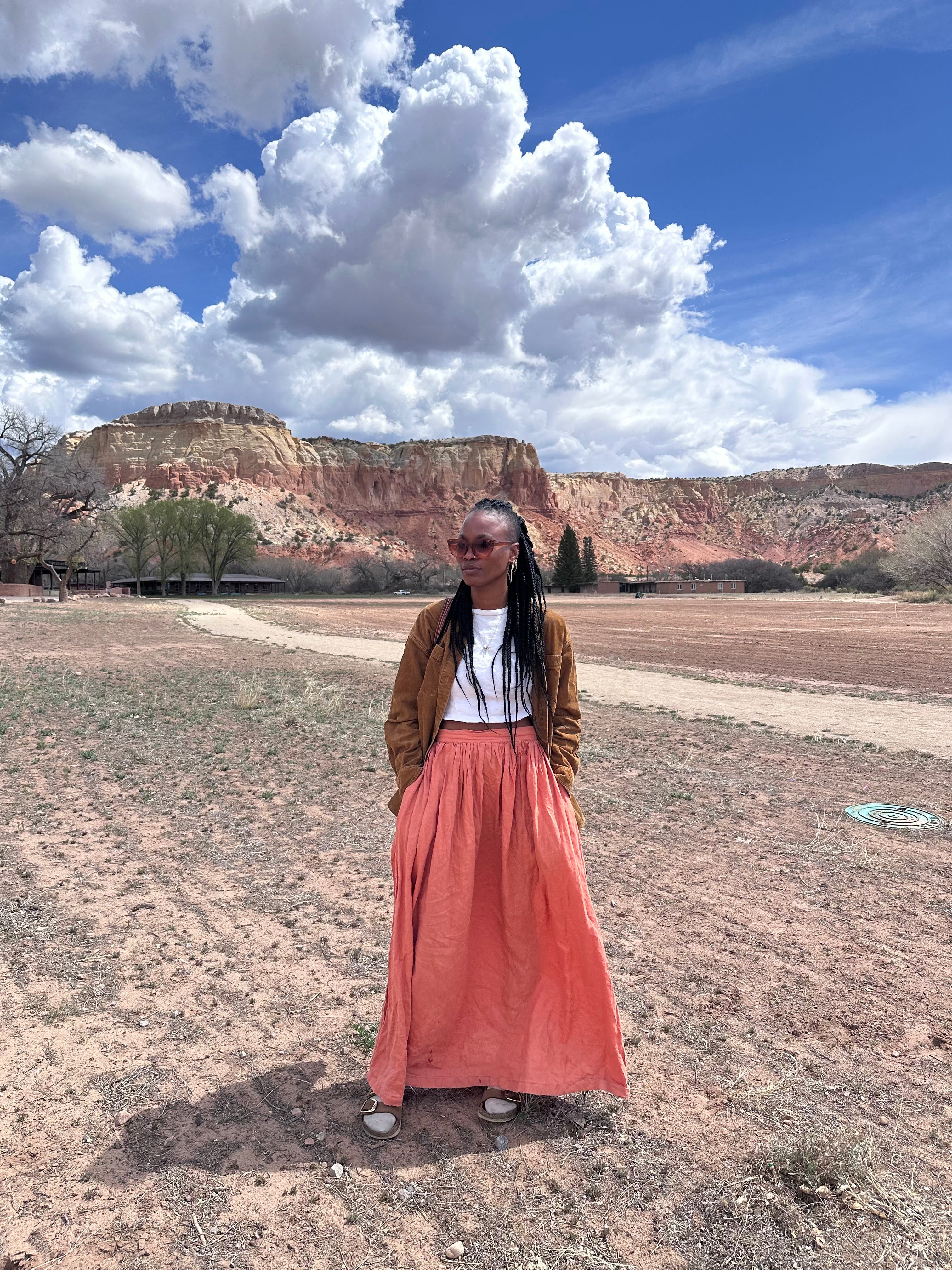
I have been thinking a lot about the separation, the strange interior gap between who I am and who others perceive me to be, a gap that I felt for a very long time but never quite had language for. I came to feel it most acutely when I became a senior executive at Twitter, the company now known as X, and started to post tweets that revealed more of my inner thoughts and emotions, the kinds of reflections that felt risky to put into the open but somehow necessary, somehow inevitable. By doing so, I seemed to attract many, many individuals, often from underrepresented and misunderstood groups, who reached out to share that they were inspired by me, that I was somehow showing bravery in being myself, courage in telling the truth, what looked from the outside like a fearlessness about repercussions. And as a Black woman and a Caribbean immigrant who had risen the ranks of one of the most reputable tech firms in the world at the time, it felt doubly inspiring to some, this sight of me in a place that was not built for me, speaking in a register that was unmistakably mine.
But often, when I would sit with these individuals, many of whom only knew me through my tweets and had reached out hoping for advice, they were first surprised that I made the time. And then there was something else, something I noticed in their faces and in the cadence of their voices, a kind of awe about being in my presence that did not resonate with me, that did not match anything I felt about myself. They would ask me questions like, how did you get to where you are while still being yourself, and how do you continue to do so, and I remember the distinct feeling of surprise that would rise up in me. I did not think of myself as inspiring, I did not feel like I had been particularly strategic about my career. I had simply taken every situation, every circumstance, every team challenge as it came to me, and tried my very best to approach the people around me with empathy, with love, with a genuine desire to do the right thing and be attentive to the person in front of me, curious about who they were and what they needed. That, for me, was how I expressed how much I cared, and it was also my love language, the way I had always wanted to be loved, to have someone genuinely curious about me and attentive in a way that allowed them to support me fully in the ways I needed, not in the ways they assumed I needed.
That was the first time I really started to feel the dissonance, though if I am honest with you, the very first time was earlier still, when I was at Colgate-Palmolive, living in Switzerland as the Head of Insights and Analytics for the Africa Eurasia division, with responsibility for teams across many countries, including South Africa. There was one young South African woman who, after a meeting, in the soft enclosure of a one on one, expressed her awe that I, a Black woman, had the ability and the courage to challenge the white men who were either my peers or my managers. For her this was a big deal. She was operating in a post apartheid world where the disgusting reality of that era had legally gone away, but the ramifications were still being worked through inside every workplace, every conversation, every meeting room, including the ongoing labor of making sure there was real representation of Black and brown South Africans who had been disenfranchised for so long. And so the sight of me, juxtaposed with these white men, was an amazing thing for her, and her question in that one on one was, how do you do it. It was really the first time I was asking myself the same question, how do I do it, and I felt, in that moment, something close to fraudulence, because I did not have any inspirational answer to offer her, no method, no framework, no hidden practice.
What I had instead was an awareness, slowly forming, that my lived experience had given me a different relationship to limitation than many of the people who were looking at me with such reverence. I had grown up on a Caribbean island surrounded by Black and brown people at the highest levels across every facet of society and industry, I had attended an all girls school for the entirety of my education, I had danced with women, I had been raised by a single mother alongside one sister. My sense of what was possible for my gender or my color was very different from the sense carried by others, especially those in South Africa, and later, those in America. So I had the awareness, but I had a hard time sitting inside the language of inspiration. I could not see myself the way they saw me, because every day was its own new struggle, and what I cared about most was that the people around me felt seen, perhaps because I myself had always wanted to feel seen.
And so a quiet dissonance set in, and it continued, through new chapters, new roles, new cities, new versions of the work.
Yesterday, as I was driving to a breath work session being held by my friend Roanne Adams, who is based in LA but wanted to bravely realize her dream of facilitating a session in New York, I turned off the radio. I really wanted to think on the road and let my thoughts move freely. I had been feeling a little more clarity after a week of being deeply ill, several days of a fever over 104 degrees, a visit to the ER to test for all sorts of things, including meningitis, and the ride over was the first stretch of road in a while where my mind felt soft enough to listen to itself. It was on that drive that the language finally arrived, eternal dissonance, two words that named the sensation I had been carrying for so long. The feeling of being separate from the external perception of me. The strange pull I had felt, sometimes, toward wanting to live into that perception because it sounded so intoxicating, so close to a self I might have wished to be. Maybe at some subconscious level I had believed I was all the things people said I was, but consciously, in my body, as a felt sense, it had never been real. Which is why, every time someone said, you are inspiring, something inside me would go quiet and ask, are you sure you are talking about me.
I logged the phrase in my mind on that drive, the way you log a thought you know is going to keep coming back, and I thought, this is the title of an essay, maybe even a book waiting to become. Then I arrived at Roanne’s session, and I went in committed to full participation, an open heart and an open mind, ready to see what would come up. Roanne anchored us into the moment by asking questions that helped me center on the fact that the dreams I hold for myself are big, and that I could go even bigger.
And somewhere in the breath, in the slow tidal rhythm of letting go and drawing back in, my divine feminine rose up to meet me. Not as an idea but as a current, moving through my lower chakras with a heat and a weight and a knowing that I could not argue with, an unending power so certain and so firm in my body that it was undeniable. It left no room for the small voice that usually tries to shrink the moment back down to something manageable. And in that felt sense awareness, resting inside my own body the way I had always wanted someone else to rest their attention on me, there was no wall, no membrane, no thin veil between the me that I know I am and the me that others have always perceived. There was only the feeling of already being there, of already being her, of having always been her. The dissonance was never a flaw in my self perception. It was the lag between an inner knowing that had been forming for years and a body that had not yet caught up, a soul that recognized the truth of what others were reflecting back to me long before my conscious mind would let me sit inside it. The dissonance was the space in which I was becoming, the friction of an outward expression slowly aligning itself with an inward essence, the work of being thinly veiled, divinely aligned.
From that place, I felt energized and brave enough to claim my big dreams out loud, to say the names of the people I want to collaborate with and the kinds of spaces I want to operate in, without any attachment to the outcome, with only the joy of dreaming out loud as its own complete and sufficient act. And more importantly, that knowing made me suddenly able to recognize, with a clarity I had not had before, all the places where I had been receiving small because I had been thinking small, feeling small, approaching things hesitantly, asking for less than my full portion because some quiet part of me had not yet believed she was allowed to ask for more. I cannot say for sure that the big dreams I now hold will be met by the world with the same zeal and openness I felt resting inside that collapsed dissonance. But I have an optimism I have not had before, and I feel a real dissolution of the latent fear I had been carrying about taking up the space, about saying out loud, these are the people I want to build with, these are the rooms I want to be in, these are the dreams I am no longer willing to hold quietly.
The people who reached out to me over the years were not seeing something that was not there. They were seeing something I had not yet learned how to see in myself, and what they were really inviting me to do, gently, persistently, across years and continents and roles, was to come home to it.
And on the floor of that breath work session, I think I finally did.